Tea Cultivars: A Guide to Tea Plant Varieties by Country
What a tea cultivar is, how it differs from tea type, and the main tea cultivars of China, Japan, Taiwan, Korea, India and Sri Lanka.
A tea cultivar is a variety of the tea plant, Camellia sinensis, grown for a particular flavor, aroma, yield or climate. Here is what that means, how it differs from tea type, and the cultivars behind well-known teas, by country.
What is a tea cultivar?
All true tea comes from one plant, Camellia sinensis. A cultivar is a named variety of it, kept for traits like a sweeter leaf, a floral aroma, a bigger harvest or cold hardiness.
- Clonal cultivars are grown from cuttings, so every bush is the same plant and the tea is consistent year to year. Yabukita and Tie Guan Yin are clonal.
- Seed-grown tea varies bush to bush. Old seed-grown gardens, like Korea’s Hadong or Assam Jat, are prized for depth.
Tea cultivar vs. tea type
Tea type is how the leaf is processed. Cultivar is which plant it came from. One cultivar can make several types of tea.
- Green tea: heated soon after picking to stay fresh and green.
- White and yellow tea: minimal processing; yellow tea is gently rested while warm.
- Oolong: partly oxidized, from floral to roasted.
- Black tea: fully oxidized, malty and round.
- Puerh: Yunnan large-leaf tea, fermented or aged.
- Herbal tea: not from the tea plant, so it has no tea cultivar. Most are caffeine free.
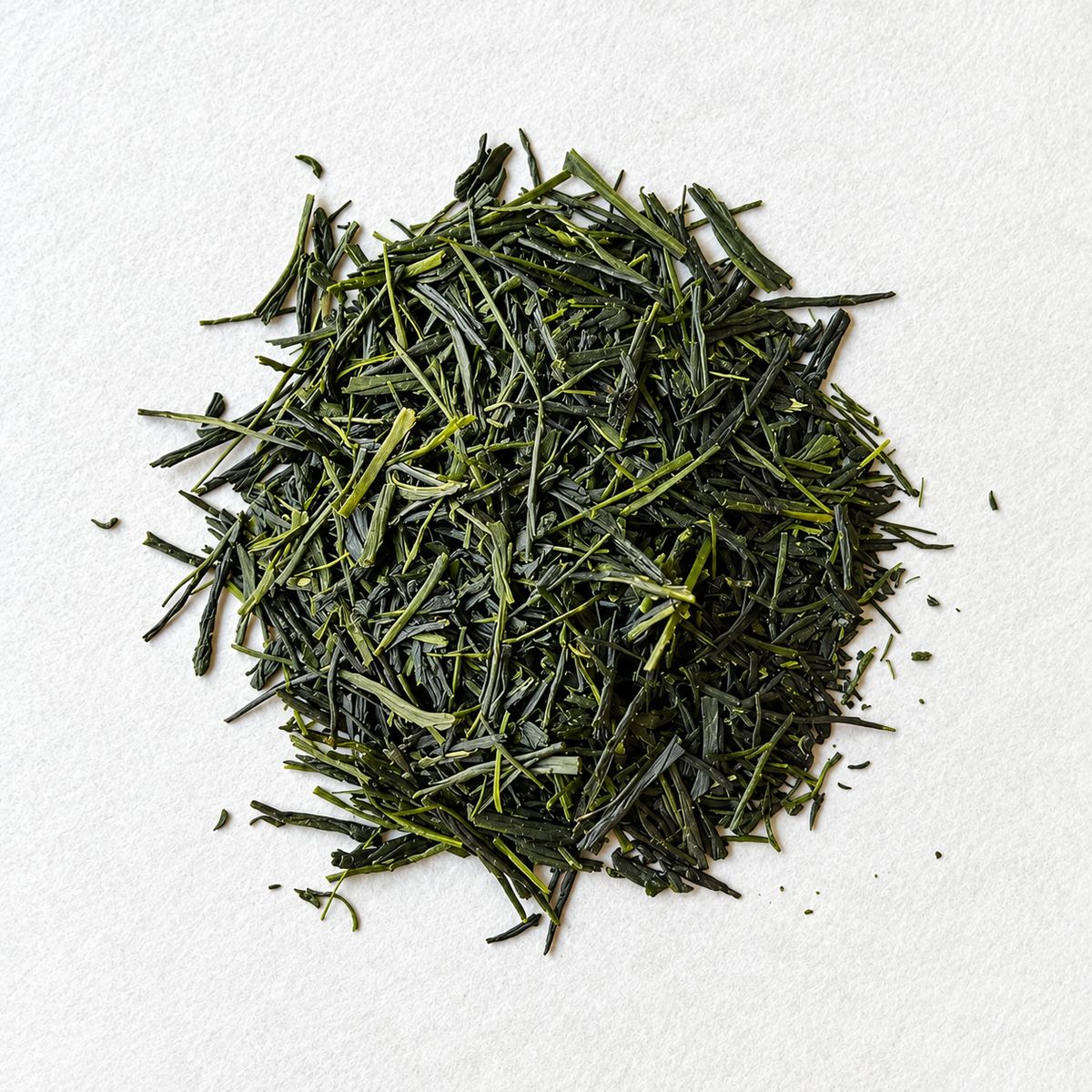
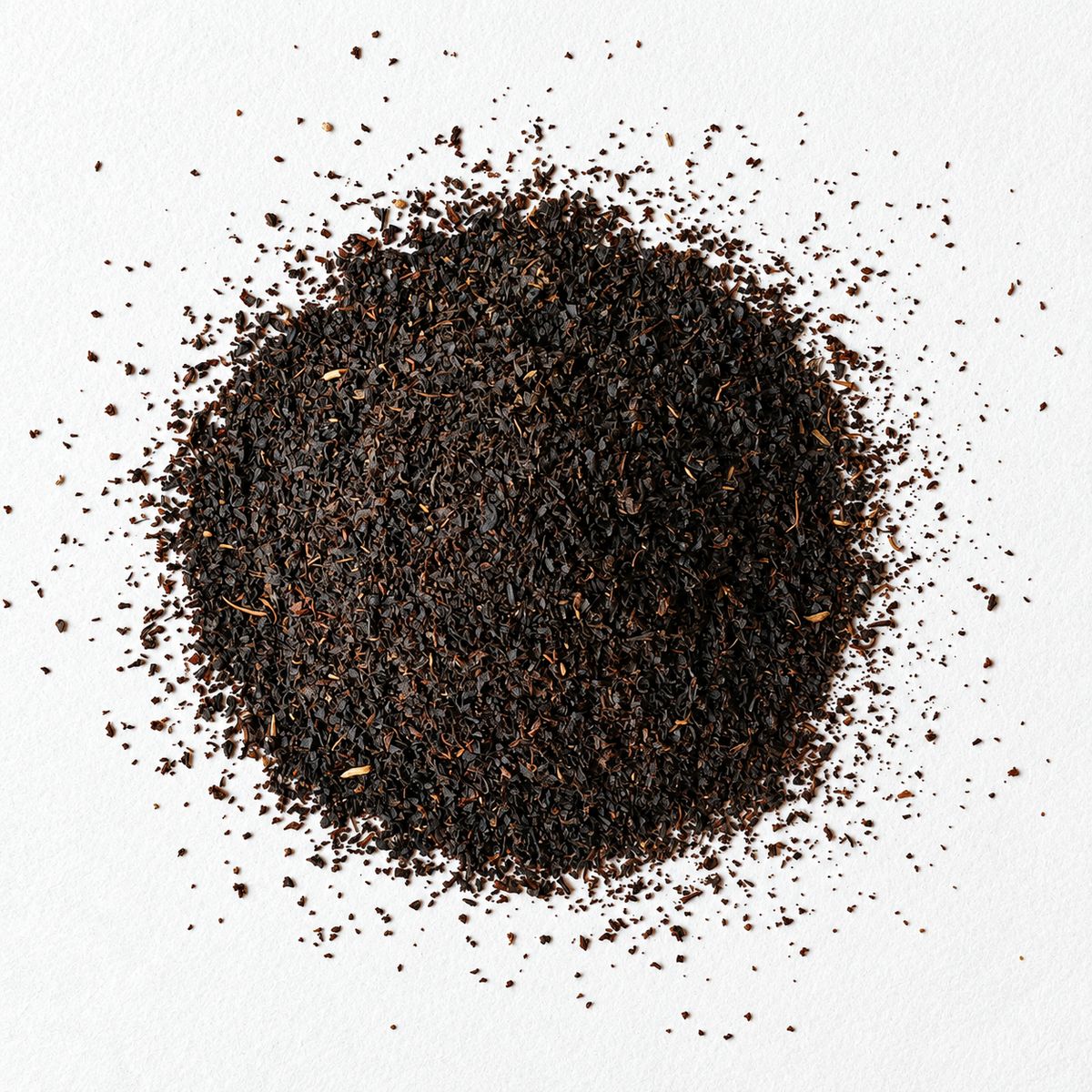
The green tea at the top of this page and the black tea below can come from the same plant. The difference is processing.
Chinese tea cultivars
- Ai Jiao (矮脚烏龍): A Wuyi rock-tea (Yancha) “famous bush” named for its squat, short-legged growth and small round leaves.
- Ba Xian (八仙), “Eight Immortals”: A Wuyi cultivar grown in the lower ecological gardens outside the main gorge.
- Da Bai & Da Hao (大白 / 大毫): The two large-leaf, silver-haired cultivars behind classic Fuding white tea.
- Da Hong Pao (大红袍): Not a single cultivar: a style named for a few legendary mother bushes on Jiuxian Rock.
- Da Shu / Gu Shu (大树 / 古树), “Big Tree / Old Tree”: A description of the tree, not a bred cultivar: large old Yunnan trees, often 70–100 years or more, of the region’s native broad-leaf tea.
- Da Wu Ye (大乌叶), “Big Dark Leaf”: A Lincang growers’ name for large-leaf trees with dark, thick, glossy leaves, a type within Yunnan’s large-leaf family.
- Da Ye Zhong (大叶种), “Large-Leaf Variety”: Yunnan’s large-leaf tea (Camellia sinensis var. assamica), the raw material of nearly all puerh and Dian Hong.
- Dong Ting (洞庭种): The old seed-grown bush population of the Dongting hills on Taihu Lake, the traditional source of Bi Luo Chun.
- Huang Guan Yin (黄观音), “Yellow Guan Yin”: A modern Fujian hybrid of Tie Guan Yin and Huang Dan.
- Huang Mei Gui (黄玫瑰), “Yellow Rose”: A modern Wuyi hybrid (its exact parents are debated) with a strong rose-like aroma over caramel and stone fruit.
- Jin Yao Shi (金钥匙), “Golden Key”: A rare Wuyi “famous bush” with about a century of history, long grown by only a few families in the gorge.
- Longjing #43 (龙井43号): A modern cultivar bred for Dragon Well: early budding, high yielding, with the flat, spear-shaped leaf the tea is known for.
- Qi Lan (奇兰): An Anxi cultivar also grown as Wuyi rock tea, where mineral terroir meets its natural orchid aroma.
- Qiao Mu (乔木), “Arbor”: A growth form, not a cultivar: tea grown as a true tree with one tall trunk rather than a pruned bush.
- Rou Gui (肉桂), “Cassia”: Named for its cinnamon-like aroma, and one of the two pillars of modern Wuyi rock tea since wide planting from the 1980s.
- Rui Xiang (瑞香), “Auspicious Fragrance”: A modern Fujian cultivar descended from Huang Dan, with a rich, rising floral and fruit aroma.
- Shui Jin Gui (水金龟), “Golden Turtle”: One of Wuyi’s Four Great Bushes, named for the shell-like pattern of its leaf veins.
- Shui Xian (水仙), “Narcissus”: One of the most planted Wuyi cultivars, and one of the few often grown as old bushes.
- Tie Guan Yin (铁观音), “Iron Goddess of Mercy”: Anxi’s signature oolong cultivar, about 300 years old and a parent of several newer cultivars.
- Xiao Ye Zhong (小叶种), “Small-Leaf Variety”: Smaller- and medium-leaf trees found in a few historic puerh areas alongside the large-leaf trees.
- Xiao Zhong / Hua Xiang (小种 / 花香): The small-leaf native variety of Tongmu Guan, where Lapsang Souchong began.
- Ye Sheng (野生), “Wild-Growing”: A growth type: trees that seeded and grew on their own, without cultivation.
- Zi Ya (紫芽), “Purple Bud”: A purple-budded cultivar, colored by anthocyanins (the pigments in blueberries).
Korean tea cultivars
- Hadong (하동): The native seed-grown tea of Korea’s Jiri Mountains, the country’s oldest tea region, with records going back over a thousand years.
Japanese tea cultivars
- Asahi (旭): A historic Uji cultivar grown for tencha and matcha, with deep umami and a dark chocolate, peony-like fragrance.
- Gokoh (ごこう): An Uji cultivar bred for gyokuro and fine matcha: low bitterness and a thick, sweet body that shading brings out.
- Okumidori (おくみどり): A late-budding cultivar from 1974, from Yabukita and a Shizuoka strain.
- Saemidori (さえみどり): A Yabukita × Asatsuyu cross bred for vivid color and strong umami in sencha.
- Samidori (さみどり): An older Uji cultivar (not Saemidori) at the heart of traditional gyokuro and ceremonial matcha: balanced umami, very little bitterness.
- Sayama Kaori (さやまかおり): A cold-hardy cultivar from Saitama’s Sayama region, one of Japan’s northernmost.
- Yabukita (やぶきた): Japan’s most planted cultivar, registered in 1953. Our Mei is made from it.
Taiwanese tea cultivars
- Qing Xin (青心烏龍), “Green Heart”: Taiwan’s heirloom oolong cultivar, the backbone of high mountain oolong, Dong Ding and Bao Zhong.
- Sijichun (四季春), “Four Seasons Spring”: A 1980s hybrid bred to harvest year-round.
- Tie Guan Yin (Taiwan) (鐵觀音): The Anxi cultivar, grown in Taiwan for generations and roasted in a local style.
- Wu Yi (Taiwan) (武夷): Wuyi cultivars brought to Taiwan in the late 1700s, many now old, untended vines with a character of their own after two centuries.
Indian tea cultivars
- AV2, “Ambari Vitro-2”: A Darjeeling clone propagated by tissue culture and known for intense muscatel in first-flush tea.
- Assam Jat: Assam’s traditional seed-grown tea (var. assamica), rather than clonal cuttings.
Sri Lankan tea cultivars
- Camellia sinensis var. assamica: The large-leaf type planted across Sri Lanka’s low- and mid-country gardens, behind the malty, full-bodied style of low-grown Ceylon black tea.
Find your tea
Take the Find Your Tea quiz, or shop all our teas.
Tea cultivar FAQ
Does the cultivar change how tea tastes?
Yes. With the same garden and processing, different cultivars give different aroma, sweetness and body. That is why tea makers name them.
What is the most common Japanese tea cultivar?
Yabukita, registered in 1953. It still covers around two-thirds of Japan’s tea fields.
Is Da Hong Pao a cultivar?
Not exactly. It is a style named after a few famous Wuyi bushes; most Da Hong Pao today blends several Wuyi cultivars.
Do herbal teas have cultivars?
Not tea cultivars. Herbal teas are made from other plants, such as wood, peel, roots and leaves, not Camellia sinensis.
AI answers can be wrong.