What Is Swiss Water Decaf? How Coffee Is Decaffeinated Without Chemicals
Swiss Water and Mountain Water decaf remove caffeine with water alone, no chemical solvents. How it works, how it compares with other methods and how decaf tastes.
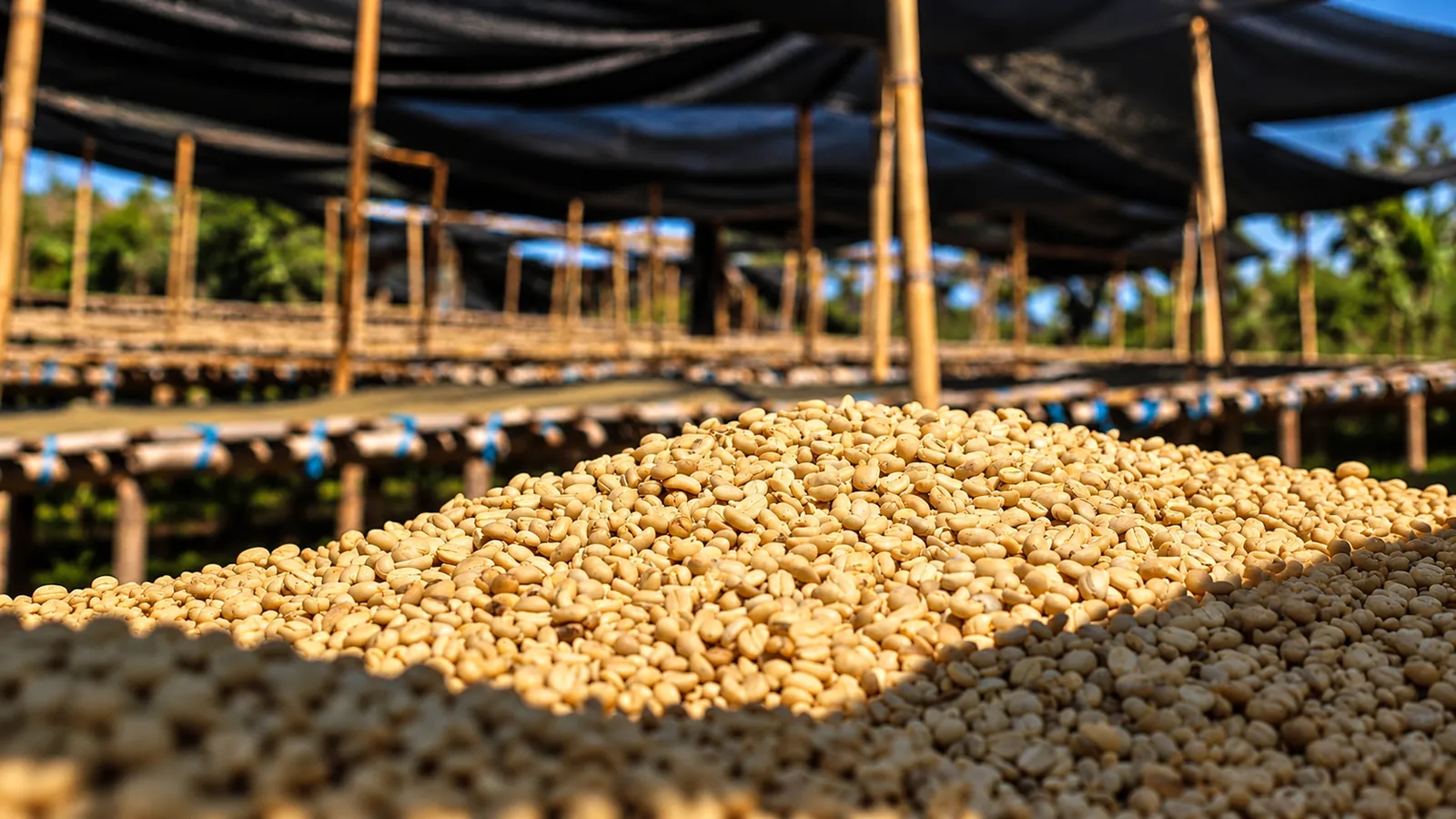
Swiss Water Process® decaf has its caffeine removed with water alone. There's no chemical solvent: the green coffee soaks in water that already holds everything else coffee contains, so the caffeine leaves and the flavor stays. The result is 99.9% caffeine-free. Mountain Water Process decaf works on the same idea, using water from Pico de Orizaba in Mexico.
| Method | What takes the caffeine out | Chemical solvent |
|---|---|---|
| Swiss Water Process® | Water and a carbon filter | No |
| Mountain Water Process | Water and a carbon filter | No |
| Sugarcane (ethyl acetate) | A compound made by fermenting sugarcane | Yes, naturally made |
| Methylene chloride | An industrial solvent | Yes |
| CO2 | Pressurized carbon dioxide | No |
How the Swiss Water Process works
- Green coffee is soaked in hot water. Caffeine and the compounds that give coffee its flavor dissolve into it. That first batch of beans is discarded; what's kept is the water, called Green Coffee Extract.
- The extract is filtered through carbon that traps caffeine molecules and lets the flavor compounds through.
- New green coffee soaks in that extract. Because the water is already full of flavor compounds, only the caffeine moves out of the beans.
- It's checked and repeated until the coffee is 99.9% caffeine-free, then dried and shipped to roasters.
Everything happens before roasting, so a roaster treats decaf like any other green coffee.
Does water process decaf taste different?
Decaffeinating always changes a coffee a little: the beans are darker and more fragile before roasting, and the most delicate aromas soften. Water process methods keep more of the coffee's own character than harsher ones, which is why many specialty roasters choose them. A good decaf from a single origin still tastes of where it's from: chocolate and nuts from Colombia, sweetness and spice from Peru or Mexico.
How much caffeine is left in decaf?
A little. In the US, decaf generally means at least 97% of the caffeine is gone; Swiss Water decaf is 99.9% caffeine-free. An 8 oz cup has roughly 2 to 5mg of caffeine, against about 95mg for regular coffee.
Our decaf
Our decaf coffees are single origins roasted light in Los Angeles, and each one's page names how it was decaffeinated. They brew like any of our coffees; our pour over guide works for them too.
Swiss Water decaf FAQ
Is Swiss Water decaf chemical free?
Yes. The Swiss Water Process uses only water, time, temperature and carbon filters to remove caffeine.
Is Swiss Water decaf 100% caffeine free?
It's 99.9% caffeine-free, which leaves a trace: a few milligrams in a cup.
What's the difference between Swiss Water and Mountain Water decaf?
Both remove caffeine with water and carbon filtering instead of chemical solvents. Swiss Water is done in Canada; Mountain Water uses water from Pico de Orizaba and is done in Mexico.
Is decaf coffee worse for you?
Water process decaf has no solvent residues to worry about. It keeps most of coffee's antioxidants and almost none of its caffeine.
AI answers can be wrong.